Analyzing Cost Trade-Offs Between Soft Jaws and Dedicated Fixtures
Evaluating Setup Times
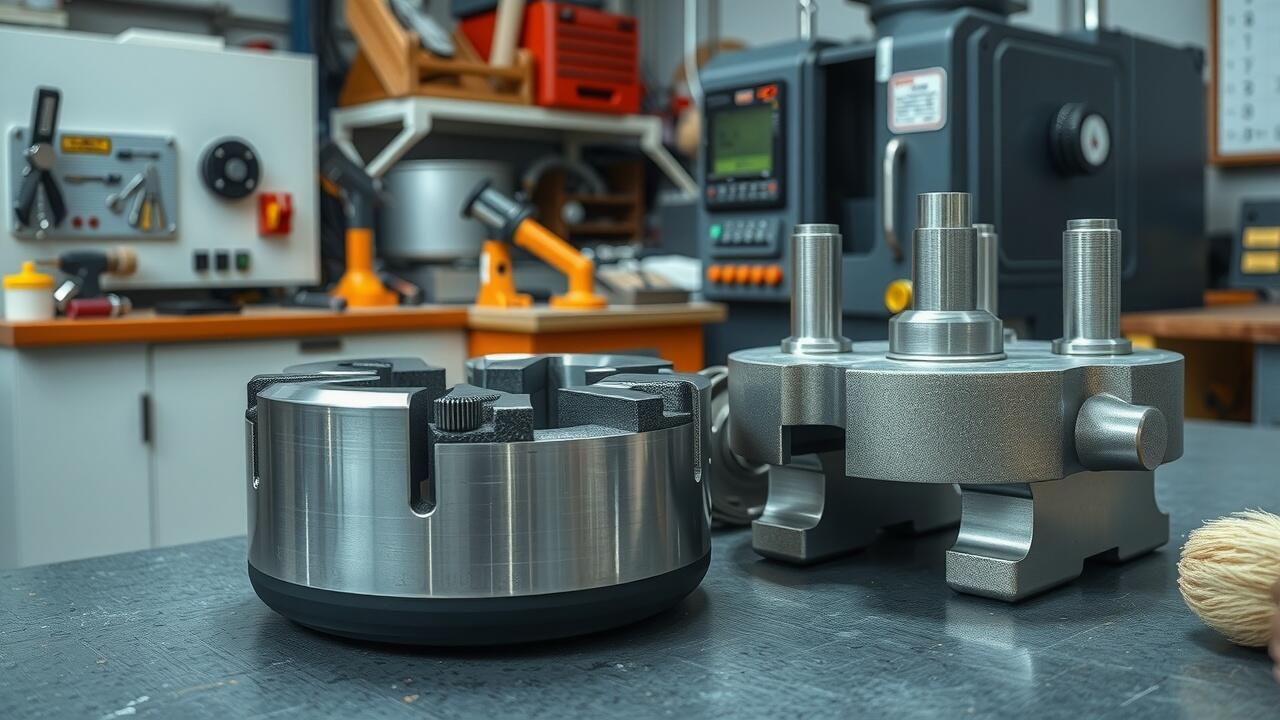
Setup times can significantly impact production efficiency. In a case study involving a machine shop that transitioned to using soft jaws, operators reported a 30% reduction in setup times compared to traditional fixtures. This type of workholding allowed the team to adapt to varying part designs with minimal adjustments. custom welding fixtures often require extensive calibration, leading to longer downtime. By leveraging soft jaws for repeatable applications, shops can streamline their processes and switch tasks with less effort, ultimately cutting operational costs.
A detailed analysis of setup times must consider the learning curve associated with each system. Companies utilizing custom workholding solutions often face steeper initial setup times due to the learning phase for operators. However, after mastering these fixtures, the throughput increases substantially. Data from another facility showed that, after three months of training with new soft jaws, operators reduced average setup time from 45 minutes to just 15. This not only enhances productivity but also allows businesses to meet tight deadlines without sacrificing quality, an essential factor for competitive industries.
How Can Setup Efficiency Affect Overall Costs?
Setup efficiency directly impacts production costs, especially in the realm of custom workholding systems. When a team can switch from one task to another more quickly, that downtime translates into savings. For instance, if a shop reduces setup time from two hours to thirty minutes for a specific welding workholding process, it can significantly increase the number of parts produced in a shift. This reduction not only boosts productivity but also lowers labor costs associated with the idle machine time.
Consider a company that routinely uses custom welding fixtures for different builds. By streamlining their setups, they capitalized on a 25% increase in overall throughput. If a fixture creates initial delays, that lost production can cut into profit margins quickly. Efficient setups encourage manufacturers to adopt a flexible approach, allowing rapid response to changing orders without incurring excessive additional costs. Investing in developing smarter setups pays off in maintaining competitiveness in a fast-paced market.
Pros and Cons of Soft Jaws
Soft jaws offer flexibility that dedicated fixtures can't match. Custom workholding solutions can adapt to various part shapes, allowing manufacturers to streamline their processes without investing in multiple fixtures. For instance, a shop specializing in welding workholdings can switch out soft jaws quickly when moving between different projects, leading to shorter setup times. This adaptability often results in increased production volumes, as operators don’t need to waste time changing fixtures for each new component.
However, there are limitations to consider. Soft jaws may not maintain the precision demanded by high-tolerance applications, especially in sectors like aerospace or medical devices. The softer material can wear faster, leading to potential inaccuracies if not monitored closely. For example, an operator relying solely on soft jaws for custom welding fixtures might find that repeated use results in loss of grip or uneven pressure, requiring more frequent replacements. Balancing these pros and cons will help you decide when to implement soft jaws versus dedicated fixtures.
What Are the Advantages and Disadvantages to Consider?
Soft jaws are popular in machining due to their adaptability and ease of use. These fixtures can be quickly modified for different parts, leading to reduced setup times compared to dedicated fixtures. For example, a shop working on various components for custom welding fixtures can easily swap jaw profiles without extensive downtime. This flexibility helps manufacturers respond to changing orders rapidly, supporting just-in-time production and improving overall efficiency. Additionally, soft jaws can be made from materials that minimize part damage, which is crucial when handling delicate components.
However, there are downsides to relying solely on soft jaws. They may not hold parts as securely as dedicated fixtures, especially during high-stress operations like heavy machining or welding workholdings. This security concern can lead to variations in part accuracy, increasing scrap rates. A machine shop that invested in soft jaws for all applications reported a 15% increase in part rework, while those using dedicated fixtures maintained tighter tolerances. Ultimately, the decision to use soft jaws versus custom workholding solutions requires a careful assessment of the specific requirements and trade-offs within each manufacturing scenario.
4 Essential Factors in Fixture Selection
When selecting fixtures for any project, consider the type of material you'll work with. Compatibility is key; certain metals might require specific types of custom workholding to ensure precision. For example, aluminum might work well with softer jaw fixtures due to its lightweight nature, while steel might demand more robust dedicated fixtures to maintain stability during welding workholdings. Evaluate whether the selected fixture can handle the range of materials involved in your production to minimize future modifications.
Next up is the complexity of the components being manufactured. Intricate geometries may call for custom welding fixtures tailored to specific shapes and sizes, allowing for better fitment and reduced setup times. One case study showed that a manufacturer reduced setup time by 30% after switching to a design that incorporated movable elements in their fixtures, showcasing just how impactful this factor can be. Additionally, factor in production volume; high-volume runs may justify the investment in dedicated fixtures, while lower volumes might benefit more from adaptable solutions like soft jaws.
How Can These Factors Influence Your Decision?
Choosing the right fixture for a job involves considering multiple factors that can shift your operational costs. Setup time is crucial; for instance, a dedicated fixture can significantly reduce the time taken for repetitive tasks, often yielding productivity boosts of 20% or more. On the other hand, custom workholding solutions like soft jaws can offer greater flexibility for small batch sizes, enabling quick adaptations for different parts without the lengthy setup associated with rigid fixtures.
Material compatibility stands out as another core consideration. Imagine a welding operation needing specialized welding workholdings that align with varying material types. The right custom welding fixtures can help maintain precision across different materials, thus minimizing defects. Assessing the production volume is equally vital. Dedicated fixtures make sense for high-volume runs where the upfront cost can be offset by the increased efficiency, while soft jaws might be the better bet for lower volume, more diverse workflows.
Real-World Applications of Soft Jaws
Soft jaws find their niche in the world of custom workholding, especially in applications requiring adaptability and precision, such as automotive assembly lines. A case study from a tier-one automotive supplier highlighted a 30% reduction in setup time when switching from rigid fixtures to soft jaws for various machining tasks. These flexible solutions can be quickly modified to accommodate different part geometries, making them ideal for environments that handle diverse production runs.
Welding workholdings heavily benefit from soft jaws as well, especially when assembling structures that vary in dimensions. A notable example involves a company specializing in fabricating custom welding fixtures for intricate designs. The adoption of soft jaws enabled the team to achieve 15% more efficiency during the welding phase due to improved part stability and reduced repositioning time. Adapting to the specific requirements of each project not only accelerates the workflow but also enhances the overall quality of the final product.
How Are Soft Jaws Used in Various Industries?
Soft jaws have become a vital component in the manufacturing sector, especially for tasks involving delicate parts, where uniform pressure is essential. Industries like aerospace often utilize soft jaws for their custom workholding solutions. For instance, when machining complex brackets or housings, the ability to modify soft jaws for different geometries ensures effective gripping without risking damage to sensitive surfaces. This flexibility can lead to decreased setup times and reduced tool changes, ultimately improving productivity.
Similarly, in the automotive sector, soft jaws play a substantial role in welding workholdings. Custom welding fixtures created with soft jaws allow for adjustments to various component shapes, promoting better fit-up and enhancing weld quality. A recent case study showed that a company employing soft jaws for their assembly line increased their efficiency by about 20% while maintaining consistent weld integrity. This adaptability not only fosters a smooth workflow but also paves the way for innovation in manufacturing practices.
- Soft jaws are great for handling fragile components without causing damage.
- They can be easily modified to accommodate different shapes and sizes.
- Using soft jaws leads to shorter setup times compared to traditional hard jaws.
- They help improve overall productivity in manufacturing processes.
- Soft jaws enhance the quality of welds by ensuring better fit-up during assembly.
- Industries like electronics also utilize soft jaws for precision workholding.
- Their versatility makes soft jaws a preferred choice in custom machining applications.
FAQS
What are soft jaws and how do they differ from dedicated fixtures?
Soft jaws are custom-designed grips that can conform to the shape of the workpiece, while dedicated fixtures are specifically made for a single task or part. Soft jaws are more versatile, but dedicated fixtures often provide higher precision for specific jobs.
How do setup times impact production costs?
Shorter setup times generally lead to lower production costs because they allow for more efficient use of labor and machinery. If the setup process takes longer, it can significantly increase overall costs due to downtime and reduced output.
What are some advantages of using soft jaws?
Soft jaws are flexible and can adapt to different workpieces, reducing the need for multiple fixtures. They can also be more cost-effective in the long run since they can handle various parts without requiring constant changes.
Are there any downsides to using soft jaws?
Yes, while soft jaws are versatile, they may not provide the same level of precision and stability as dedicated fixtures. This can lead to variations in part quality if not properly managed.
How do I decide between soft jaws and dedicated fixtures for my project?
Consider factors like setup efficiency, production volume, precision requirements, and budget constraints. Evaluating these elements will help you make an informed decision based on your specific needs.